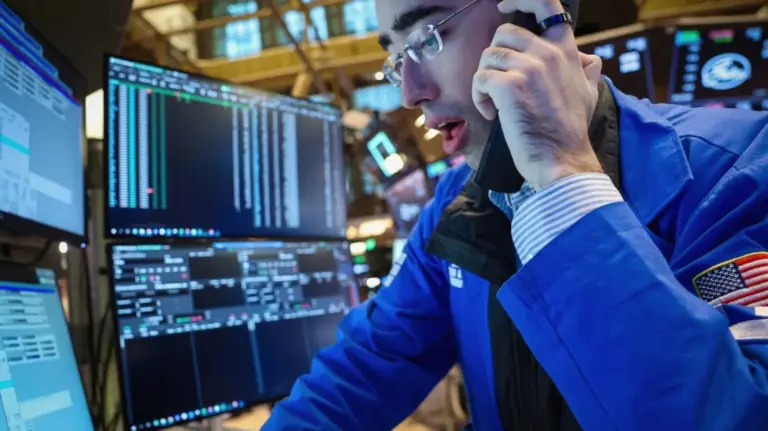
Investors are reacting with uncertainty following the sudden resignation of Jensen Huang, sending Nvidia shares sliding toward the 150 dollar mark. The departure of the long-time leader has created a vacuum at the top, though longtime CFO Colette Kress has stepped in as interim CEO while the board seeks a permanent successor. Despite Huang expressed interest in returning, the board has made it clear that they are moving forward in a different direction, leaving the market to wonder if the visionary spark behind the company’s rise has vanished along with its founder.
However, looking beneath the surface of the executive drama reveals a business that remains fundamentally powerhouse. In its third quarter, Nvidia reported staggering revenue of 116 billion dollars, representing a jump of over 100 percent year over year. This level of expansion is almost unheard of for a trillion-dollar entity, yet Nvidia continues to sit comfortably at the epicenter of the global artificial intelligence boom. Rather than slowing down, the company actually raised its growth guidance for next year from 70 percent to 75 percent, suggesting that demand for its GPUs is practically decoupled from who sits in the CEO chair.
From a valuation standpoint, many analysts argue that this dip represents a once-in-a-generation buying opportunity. Because of the current panic surrounding leadership changes, Nvidia is trading at roughly 19 times trailing earnings, which is notably lower than the broader S&P 500 average. When factoring in projected growth and next year’s expected earnings, some experts suggest the stock is essentially sitting in Wall Street’s bargain bin. With cloud customers locking in multi-year supplies and an AI infrastructure build-out likely extending through 2030, those betting on fundamentals see a path where the stock could potentially triple if it returns to standard big-tech valuations.