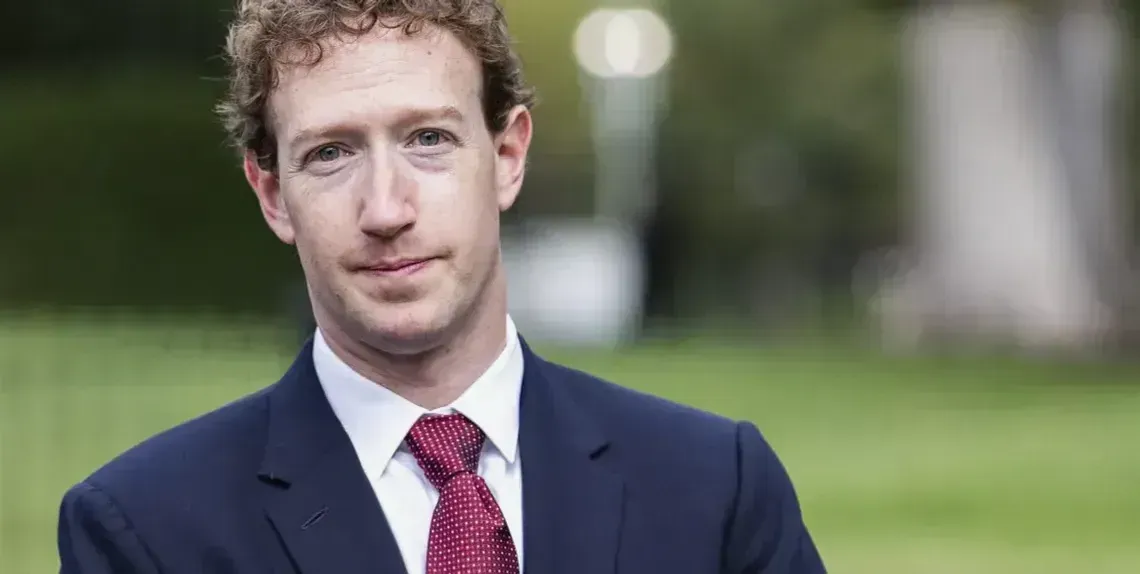
As California voters prepare to decide on a controversial one time five percent wealth tax for the state’s billionaires, Mark Zuckerberg has secured a corporate safety net to keep him from having to choose between his home and his empire. While many tech titans like Peter Thiel and Larry Page have already fled the state to protect their fortunes, Zuckerberg remained rooted in California, largely because Meta’s board viewed his physical presence near the company’s artificial intelligence labs as essential for leadership. However, recent SEC filings reveal that a potential multi billion dollar tax bill posed a direct threat to his absolute grip on the company.
The tension stems from a stark divide between how much of Meta Zuckerberg actually owns versus how much he controls. Although he possesses roughly thirteen percent of the company’s total economic value, his special Class B shares grant him sixty one percent of the voting power. Under typical rules, selling these shares to pay a massive tax bill would convert them into standard one vote shares, effectively eroding his majority control over the board and strategic decisions. To avoid this dilution, Meta’s board developed a creative solution involving a new class of non voting stock designed specifically to provide liquidity without sacrificing authority.
This arrangement allows Zuckerberg to sell off portions of his holdings to settle potential tax liabilities without relinquishing a single vote. The move essentially ensures that Zuckerberg does not end up paying out of pocket just to serve as CEO while living in California. By issuing these non voting shares, the company provides him with a way to generate cash independently of his voting blocks, removing the incentive for him to relocate his primary residence outside of the state boundaries before October.
While Meta officially frames the creation of this new stock class as a tool for funding its aggressive push into artificial intelligence and managing employee compensation, the internal documents make it clear that protecting founder led control was a priority. CFO Susan Li noted that the shift gives the company more flexibility for capital raising in an increasingly competitive global market. Ultimately, because Zuckerberg maintains unilateral approval over such changes, he has successfully navigated around the fiscal risks of California’s proposed legislation while keeping himself firmly in charge.